Shipping and logistics operations are complex flow systems where vessels, cargo, schedules, personnel, equipment, fuel, and information must remain aligned to achieve efficient and reliable performance. Integrated Flow Systems (IFS) helps identify bottlenecks, improve coordination, reduce delays, optimize resource utilization, strengthen safety and environmental performance, and support continuous improvement through structured execution, trend monitoring, and operational visibility across the entire transportation and logistics network.
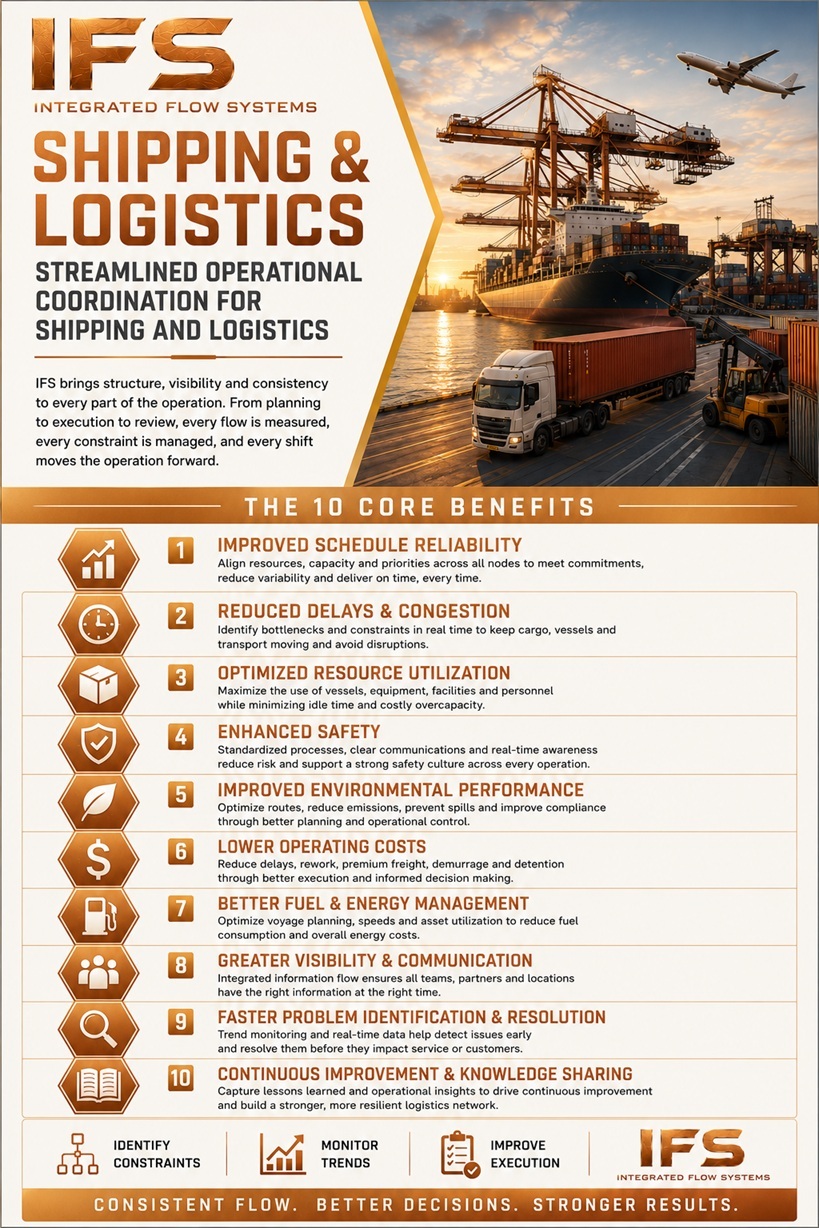
Every shipping and logistics operation is a flow system.
Cargo flows through ports, terminals, warehouses, vessels, rail networks, and transportation corridors. Information flows between operators, dispatchers, planners, crews, customers, and management. Resources flow toward schedules, constraints, and operational priorities. When those flows become inconsistent, delays increase, costs rise, fuel efficiency declines, and service reliability begins to suffer.
Integrated Flow Systems (IFS) provides a structured methodology for maintaining operational consistency across the entire transportation and logistics process. By identifying constraints, monitoring trends, documenting execution, and maintaining visibility between departments, facilities, and shifts, IFS helps ensure that personnel, equipment, cargo, and operational priorities remain aligned throughout the operation.
The result is improved schedule reliability, increased operational efficiency, reduced delays, lower operating costs, improved fuel utilization, stronger safety outcomes, enhanced environmental performance, and more effective knowledge transfer between teams and locations. Instead of relying on individual memory or isolated decisions, IFS creates a repeatable operational framework that supports continuous improvement and long-term operational excellence.
Consistent Flow. Better Decisions. Stronger Results.
Whether you're looking to reduce downtime, improve efficiency, preserve equipment, or better understand your operational data, we're ready to help.
Complete the form below and we'll discuss how Integrated Flow Systems can be applied to your operation.
Let's start the conversation.